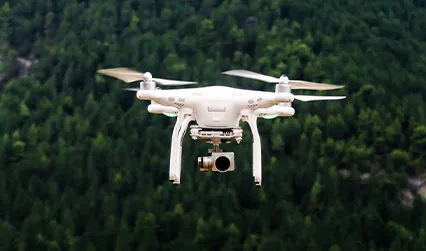
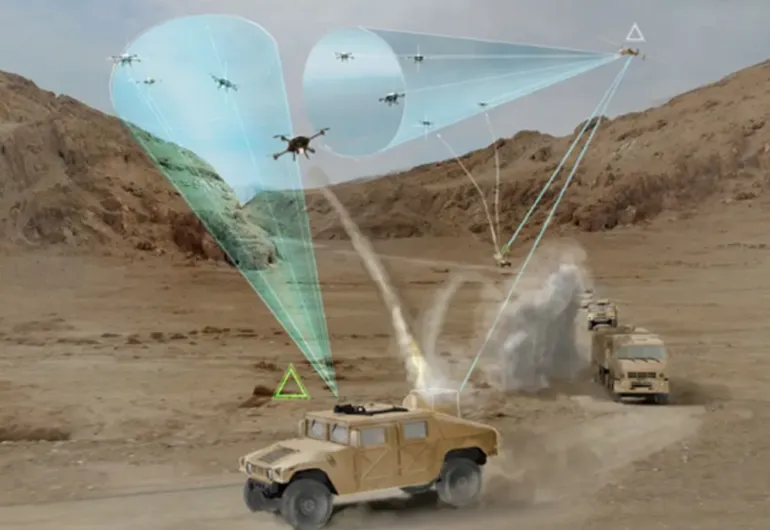
A GNSS-denied environment refers to an operational scenario where Global Navigation Satellite Systems are unable to provide reliable positioning, navigation, and timing (PNT) services due to signal obstruction, jamming, or spoofing attacks. In military contexts, such conditions often arise from electronic warfare (e.g., high-power jammers) or complex terrains like urban canyons and dense forests
GNSS denial critically degrades UAV operations by undermining navigation, coordination, and mission effectiveness. The primary challenge is rapidly accumulating navigational error. While inertial navigation systems provide short-term continuity, their sensor drift causes significant positional deviation without GNSS corrections.This directly impairs swarm coordination and data link synchronization, which rely on precise GNSS timing. Consequently, mission effectiveness plummets: loitering munitions suffer increased Circular Error Probable (CEP), and ISR drones produce unreliable data. The environment also introduces high integrity risks from sophisticated spoofing attacks.

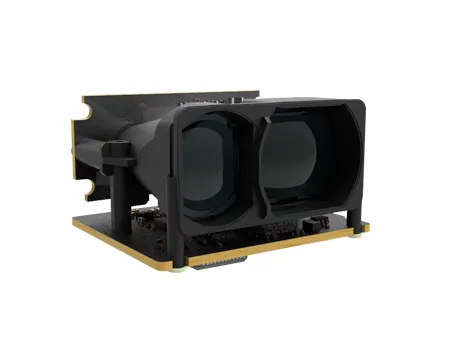
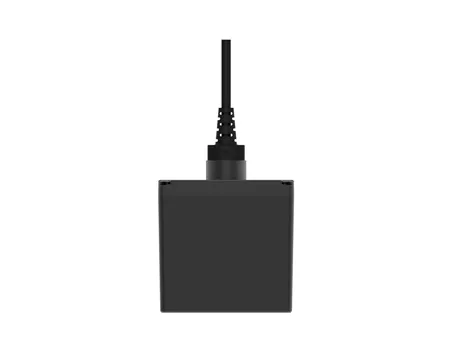
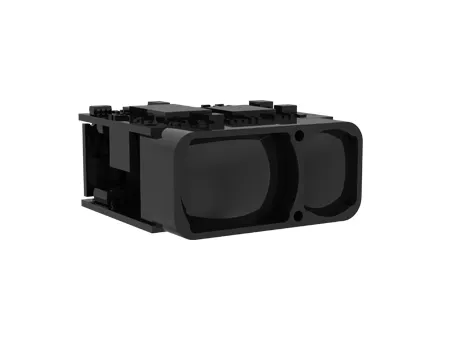
In GNSS-denied environments, a single-point LiDAR serves as a critical aiding sensor for UAV navigation, primarily by providing a highly accurate and stable reference for altitude estimation and close-range obstacle avoidance. By continuously measuring the precise distance to the ground or objects directly below or in front of the drone, it generates reliable one-dimensional data. This data is fused with inputs from an Inertial Measurement Unit (IMU) in a sensor fusion algorithm, such as an Extended Kalman Filter. This integration effectively mitigates the vertical velocity and position drift inherent in dead reckoning with IMU alone, enabling stable low-altitude flight. While it does not offer the multi-dimensional mapping capabilities of scanning LiDAR, but it provides an effective and low-cost solution, its role is vital for maintaining operational safety in complex terrains like indoors, tunnels, or under forest canopies, forming an essential part of a robust multi-sensor navigation system.