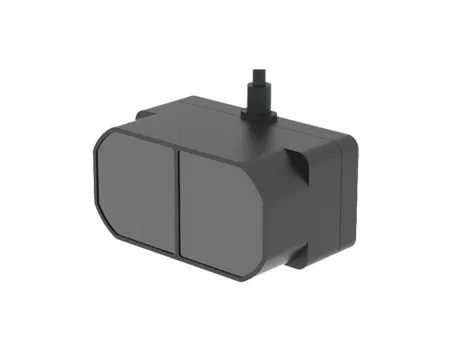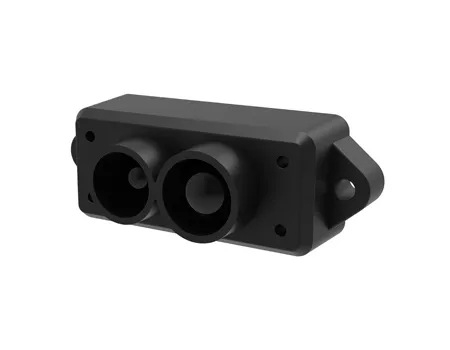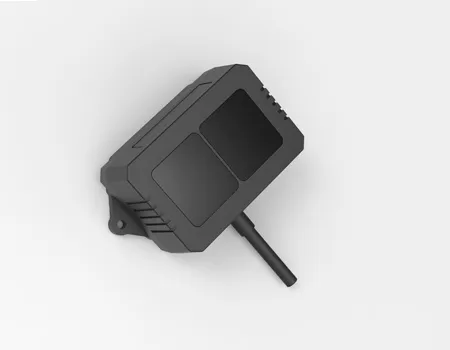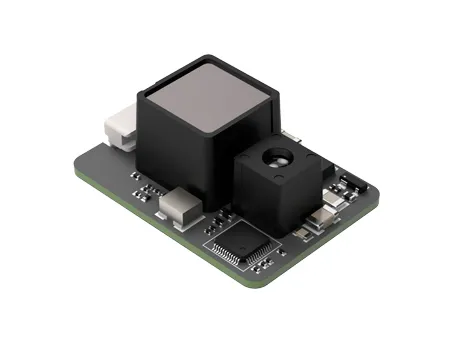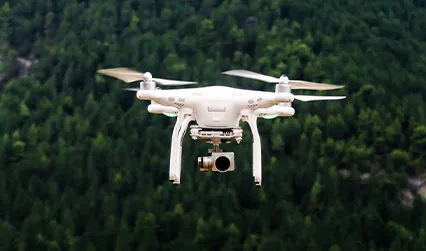
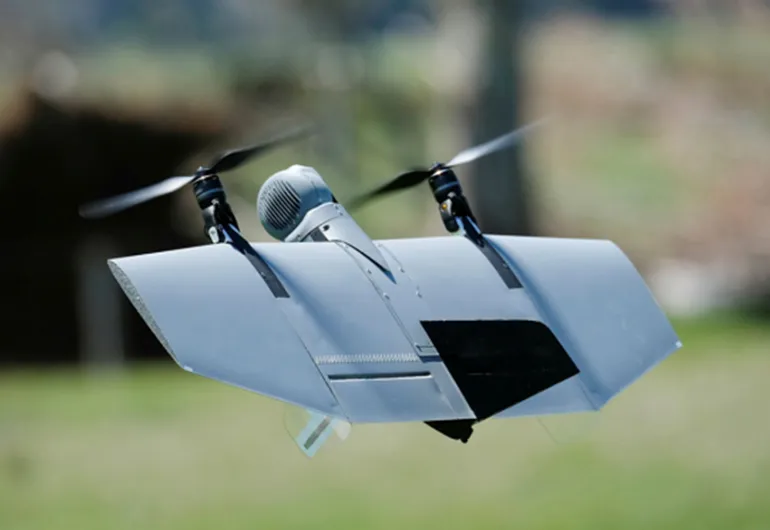
The downward-facing rangefinding sensor, typically ultrasonic or LiDAR, is critical for enabling precise, controlled, and safe automated UAV landings. Its primary function is providing high-frequency, accurate measurements of the distance to the ground directly beneath the drone. This real-time data is indispensable for flight controller feedback loops. It allows for the initiation of the landing sequence and enables a controlled, constant-rate descent by precisely regulating motor speed to avoid a hard impact.Crucially, it determines the exact moment of touchdown by detecting when the distance value stabilizes, signaling the aircraft has settled, upon which the motors are disarmed. Furthermore, this data is vital for safety, allowing the UAV to assess terrain flatness and detect unexpected obstacles below, triggering an automatic hover to abort the landing if necessary. By offering direct, high-precision measurements in the final meters, the rangefinder compensates for the inherent vertical inaccuracy of GPS and the drift of barometers near the ground, making it the definitive sensor for final approach and touchdown.
Autonomous UAV landing presents significant challenges in obtaining precise altitude data, which single-point LiDAR effectively addresses. Key challenges include the need for centimeter-level accuracy to enable a controlled, slow descent and prevent a hard impact. Complex terrain, such as grass or debris, can cause sensor interference, but LiDAR's narrow beam minimizes this by providing a clearer distance measurement. Furthermore, in GPS-denied environments like indoors or urban canyons, LiDAR offers a reliable primary altitude reference, overcoming the limitations of GPS and its poor vertical accuracy. It also outperforms ultrasonic sensors by being immune to acoustic noise and multipath reflections. Finally, LiDAR’s high update rate (up to 1000 Hz) meets the flight controller’s demand for near-instantaneous feedback, allowing for rapid, precise throttle adjustments and ensuring a stable final approach. Thus, LiDAR is a critical sensor for resolving core landing-phase measurement challenges.
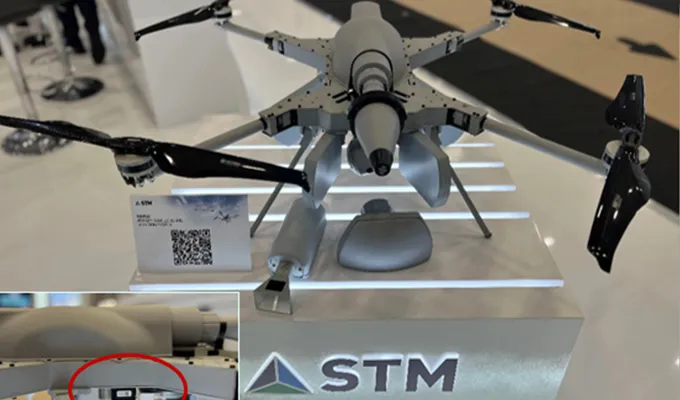
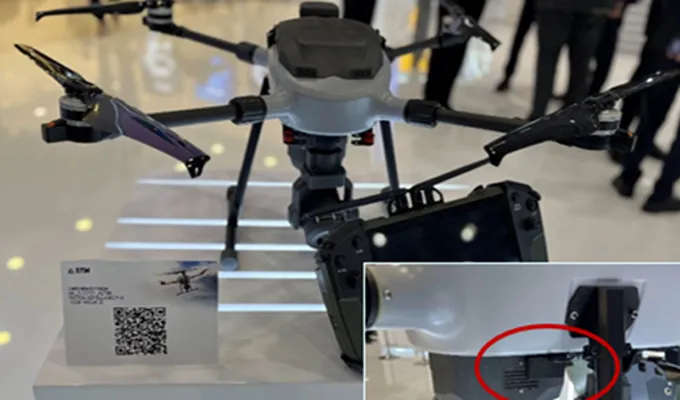
Single-point LiDAR offers distinct advantages for precise UAV landing, primarily due to its high accuracy, rapid response, and compact design. Its key strength lies in providing centimeter-to-millimeter level precision measurements through a time-of-flight laser beam. This enables the flight controller to execute a controlled, slow descent rate in the final meters, ensuring a soft touchdown and preventing bounce or damage. Furthermore, its exceptionally narrow beam divergence creates a small field of view. This minimizes the risk of erroneous readings from small ground-level obstacles like grass or debris, providing a more reliable distance-to-target reading compared to wider-beam sensors like ultrasonics. With a high update rate, it delivers real-time feedback for immediate throttle adjustments, and its small form factor is ideal for integration on compact drones. While susceptible to performance degradation in heavy rain or fog, single-point LiDAR is often the superior choice for reliable autonomous landing in GPS-denied environments and is a critical component in multi-sensor systems, providing the authoritative height reference during the final approach phase.