Specialized vehicle automation is no longer a research project—it is a procurement decision. Mining operators are deploying autonomous haul trucks to reduce labor dependency and improve cycle time consistency. Port terminal operators are automating yard tractors and container handling vehicles to increase throughput and reduce incident rates. Last-mile logistics companies are scaling delivery robot fleets to serve urban and campus environments. And across all of these applications, the same fundamental challenge determines whether the automation succeeds or fails: the vehicle needs reliable "eyes" that work in the real world, not just in controlled test conditions.
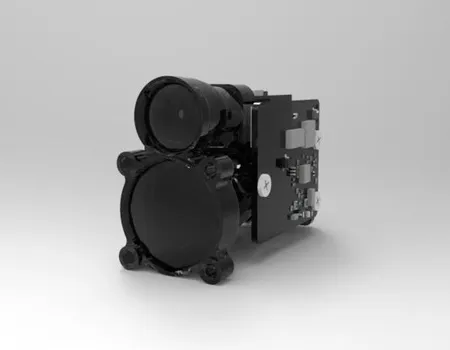
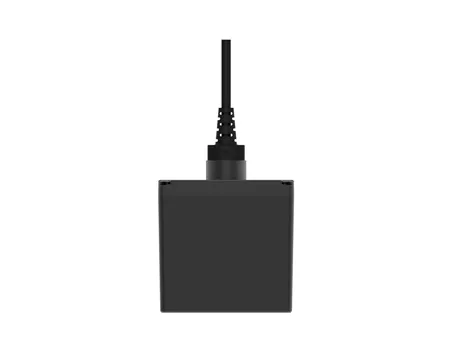
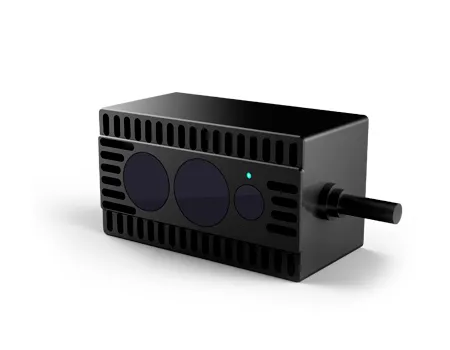
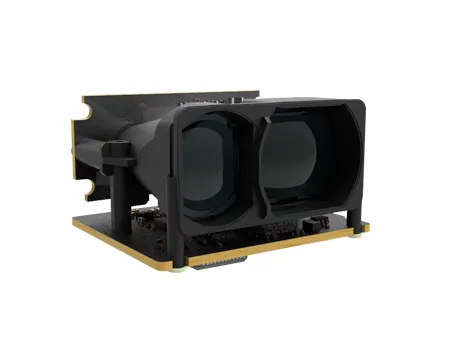
The real world for specialized vehicles means dust clouds from haul roads, rain and fog in port terminals, vibration from rough terrain, strong sunlight reflecting off wet container surfaces, and complex mixed-traffic environments where people, machines, and obstacles share the same space without predictable patterns. A 3D laser scanner that performs well in a laboratory but degrades in these conditions is not a viable perception solution—it is a liability. SentiAcu's Pixel Array LiDAR (PAL) series is designed for exactly this operating reality: 200m perception on low-reflectivity targets, up to 500m maximum range, 0.1° resolution, software-definable ROI, automotive-grade robustness, and validated performance across 50 extreme environmental conditions. The PAL-S, PAL-T, and PAL-A models cover the full range from compact delivery robot integration to rugged long-range mining and port logistics perception.
The perception requirements of specialized vehicles differ fundamentally from those of passenger car autonomous driving—and the difference matters for sensor selection.
The environmental challenge:
Mining trucks operate in environments where dust concentrations can reduce visibility to near zero, where haul road surfaces are irregular and constantly changing, and where the vehicle's own vibration from rough terrain is continuous and severe. Port logistics vehicles operate in environments where GNSS is unreliable near metal container stacks and crane structures, where pedestrian and vehicle traffic is dense and unpredictable, and where wet surfaces create specular reflection that confuses sensors calibrated for diffuse reflection. Delivery robots operate in environments where the sensor must fit within a compact form factor, consume minimal power, and detect small obstacles—curbs, bollards, children, pets—at close range while the robot navigates at pedestrian speeds.
The perception requirements that follow:
Long-range awareness for mining and port vehicles traveling at speed, where braking distance requires obstacle detection at 100–300m
Near-field blind-zone coverage for heavy machines where the vehicle's own structure creates perception gaps immediately adjacent to the chassis
Low-reflectivity target detection for dark surfaces—tires, asphalt, wet rock, dark clothing—that absorb rather than reflect laser energy
Weather penetration for outdoor operation in rain, fog, dust, and snow where optical sensors degrade
Vibration resistance for heavy equipment where sensor mounting experiences continuous mechanical stress
Compact integration for delivery robots where sensor size, weight, and power consumption directly affect platform design
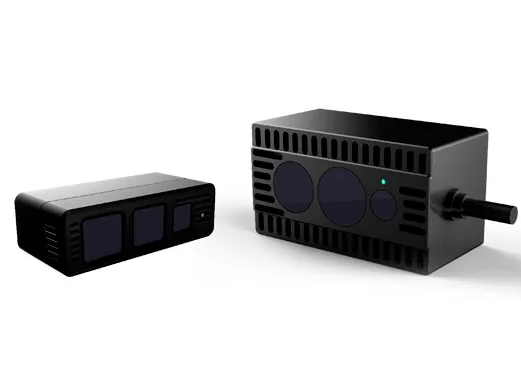
A standard 3D laser scanner designed for highway autonomous driving addresses some of these requirements but not all. SentiAcu's PAL series is specifically engineered for the specialized vehicle perception envelope—combining long-range capability, harsh-environment robustness, software-configurable sensing, and scalable form factors across the PAL-S, PAL-T, and PAL-A models.
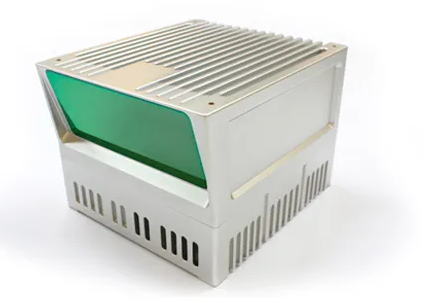
The PAL series uses pixel-array LiDAR sensing—a solid-state or semi-solid-state architecture that provides high-density 3D point cloud output with the mechanical robustness required for vehicle-mounted applications.
The sensing mechanism:
The sensor emits laser signals across a defined field of view. Reflected signals are captured and converted into distance and angle measurements, generating a 3D point cloud that represents the spatial geometry of the environment around the vehicle. The pixel-array architecture concentrates sensing elements across the field of view in a way that enables both wide-area coverage and high-resolution detail within software-defined regions of interest.
The software-definable ROI advantage:
One of PAL's most operationally significant features is its software-definable Region of Interest (ROI). Rather than distributing point cloud density uniformly across the entire field of view, the ROI function allows the autonomy software to concentrate denser point clouds on specific zones—the area immediately ahead of a mining truck on a narrow haul road, the pedestrian crossing zone in a port terminal, or the ground plane immediately in front of a delivery robot navigating a crowded sidewalk. This concentration of sensing resources on critical areas improves small-object detection and reduces false negatives in high-priority zones without requiring hardware changes or additional sensors.
The harsh-environment performance basis:
SentiAcu states that PAL products have been tested across 50 extreme conditions including temperature variation, dust, and moisture. The PAL-T model specifically addresses the most demanding vehicle environments with IP67 waterproof and dustproof rating, anti-vibration design, anti-electromagnetic interference capability, and strong-light resistance—the combination of environmental protections that mining and port logistics applications require. The PAL-T achieves 300m range at 10% reflectivity, meaning it can detect low-reflectivity targets—dark rock surfaces, worn asphalt, dark clothing—at distances that provide adequate reaction time for vehicles traveling at operational speeds.
The 3D perception for autonomous driving workflow:
The point cloud output feeds the vehicle's autonomy stack, where object detection algorithms identify obstacles, classify them by type (person, vehicle, static object, terrain feature), and track their positions over time. Localization algorithms use the point cloud to match the vehicle's current position against a pre-built map or to build a map in real time using SLAM. Path planning algorithms use the obstacle and terrain data to generate safe routes. Vehicle control systems execute the planned path through braking, steering, and speed commands. The entire loop—from sensor output to vehicle response—operates at the sensor's frame rate, which for PAL-T ranges from 1 to 20 FPS depending on the configuration.
Selecting the right PAL model requires matching the sensor specification to the vehicle type, operating environment, and perception requirements.
PAL Model Comparison
| Specification | PAL-S | PAL-T | PAL-A |
|---|---|---|---|
| Primary application | Compact robots, small vehicles | Rugged heavy equipment, outdoor vehicles | High-performance long-range perception |
| Form factor | 70mm × 80mm × 17mm | Rugged enclosure | Standard vehicle-mount |
| Field of view | 58.5° × 45.6° | Confirm with datasheet | 120° H × 25.6° V |
| Detection range | Near-field focus | 300m at 10% reflectivity | Up to 500m maximum |
| Frame rate | 17Hz | 1–20 FPS | 10Hz |
| IP rating | Confirm with datasheet | IP67 | Confirm with datasheet |
| Temperature range | −20°C to +85°C | Confirm with datasheet | Confirm with datasheet |
| Laser safety | Confirm with datasheet | EN60825 Class 1 | Confirm with datasheet |
| Anti-vibration | Standard | Specifically designed | Standard |
| EMI resistance | Standard | Specifically designed | Standard |
Universal Selection Checklist
Detection range: confirm near-field, mid-field, and long-range requirements for the specific vehicle type and operating speed
Low-reflectivity performance: confirm detection range on the lowest-reflectivity target the vehicle will encounter in operation
Field of view: confirm horizontal and vertical FoV covers the required perception zones around the vehicle
Weather resistance: confirm IP rating, fog/rain/dust performance, and operating temperature range against the actual deployment environment
Vibration resistance: confirm anti-vibration design and test data against the vehicle's vibration profile
Integration constraints: confirm sensor dimensions, mounting interface, power requirements, and data interface against the vehicle's available integration space
Laser safety: confirm compliance with the applicable laser safety standard for the deployment market
Mining Trucks and Loaders Mining haul trucks operating in open-pit or underground environments face perception challenges that no other vehicle type encounters simultaneously: extreme dust, severe vibration, irregular terrain, low-reflectivity rock surfaces, and the need for long-range awareness on narrow haul roads where passing clearances are tight. PAL-T's IP67 rating, anti-vibration design, anti-EMI capability, and 300m range at 10% reflectivity address each of these challenges directly. The software-definable ROI allows the autonomy stack to concentrate sensing resources on the haul road ahead while maintaining awareness of the vehicle's immediate surroundings.
Port Logistics and Container Yards Port terminal automation requires perception that handles the specific challenges of container yard environments: GNSS unreliability near metal container stacks, pedestrian and vehicle co-existence in the same operational zone, wet and reflective ground surfaces, and the need to detect container edges, twist-lock positions, and landing targets at close range. PAL-A's 120° horizontal field of view and 500m maximum range provide the wide-area awareness needed for yard navigation, while the software-definable ROI supports high-resolution sensing in the container handling zone.
Delivery Robots and Compact Unmanned Vehicles Delivery robots operating in urban, campus, and indoor-outdoor transition environments need a sensor that fits within a compact form factor without compromising perception quality. PAL-S's 70mm × 80mm × 17mm dimensions, 17Hz frame rate, and −20°C to +85°C operating temperature range make it a practical integration choice for small mobile platforms where sensor size, weight, and power consumption directly affect platform design. The near-field field of view (58.5° × 45.6°) covers the ground plane and obstacle detection zone that delivery robots prioritize.
Heavy Machinery Automation Excavators, wheel loaders, sweepers, and industrial forklifts operating in construction sites, warehouses, and industrial facilities need perception that covers both the immediate work zone and the surrounding safety perimeter. The combination of near-field blind-zone coverage and mid-range obstacle detection that PAL provides supports both the precision work tasks and the safety monitoring functions that heavy machinery automation requires.
GNSS-Challenged Environments In ports, tunnels, underground mines, warehouses, and near high metal structures, satellite positioning is unreliable or unavailable. 3D LiDAR-based SLAM—using the point cloud to build and match against a spatial map—provides the localization capability that allows vehicles to navigate accurately without GNSS. PAL's high-density point cloud output provides the spatial detail that SLAM algorithms need to maintain accurate localization in feature-rich industrial environments.
Step 1 — Define the vehicle type and perception requirements. Delivery robot, mining truck, port AGV, yard tractor, forklift, or heavy machine. Each vehicle type has different speed, size, operating environment, and perception zone requirements that determine the appropriate PAL model and mounting configuration.
Step 2 — Map the perception zones. Near-field (0–10m) for blind-zone and collision avoidance; mid-field (10–100m) for path planning and obstacle tracking; long-range (100–500m) for high-speed vehicle awareness. Confirm which zones are critical for the specific vehicle application and select the PAL model whose field of view and range cover all required zones.
Step 3 — Validate harsh-environment performance. Test the sensor in the actual deployment environment—not only in laboratory conditions. Dust, rain, fog, vibration, and strong sunlight interact with sensor performance in ways that laboratory specifications do not fully capture. SentiAcu's 50-extreme-condition validation provides a strong baseline, but site-specific testing before production deployment is recommended.
Step 4 — Integrate the point cloud output. Connect the sensor output to the vehicle's perception software stack. Configure the software-definable ROI to concentrate point cloud density on the highest-priority perception zones for the specific application. Validate that the data interface (Ethernet, CAN, or other) is compatible with the vehicle's computing platform.
Step 5 — Commission safety logic. Define detection zones, braking thresholds, warning zones, speed limits by zone, and fail-safe behavior for sensor fault conditions. Safety logic commissioning is a critical step that determines whether the perception system meets the operational safety requirements of the deployment environment.
Step 6 — Plan maintenance. Lens cleaning schedule based on dust exposure level; mounting inspection for vibration-induced loosening; firmware and software updates; calibration verification at defined intervals; connector and weather seal inspection for outdoor deployments.
Fewer collision incidents from reliable perception in harsh conditions reduce equipment damage, repair cost, and production downtime—the primary financial justification for perception system investment in mining and port logistics.
Reduced manual intervention from reliable autonomous operation reduces the labor cost of vehicle supervision and the safety risk of human operators in hazardous environments.
Lower integration cost from software-definable ROI—one sensor configuration covers multiple perception zones without requiring additional hardware—reduces the sensor count and integration complexity per vehicle.
Better uptime from validated waterproof, dustproof, and vibration-resistant design reduces sensor replacement frequency and the associated vehicle downtime in harsh operating environments.
Faster autonomy deployment from configurable sensing parameters allows the autonomy software team to optimize perception performance for the specific application without hardware changes—reducing development time and deployment cost.
Specialized vehicle automation in 2026 depends on perception systems that perform reliably in the environments where these vehicles actually operate—not in controlled test conditions. A 3D laser scanner for mining, port logistics, delivery robots, and heavy machinery must combine long-range detection, low-reflectivity target performance, weather and vibration resistance, and flexible integration capability in a single sensor platform. SentiAcu's PAL series delivers all of these capabilities across three models—PAL-S for compact robot integration, PAL-T for rugged heavy-equipment deployment, and PAL-A for high-performance long-range perception—with software-definable ROI, automotive-grade robustness, and validated performance across 50 extreme environmental conditions.
Visit the SentiAcu PAL LiDAR product page to request a recommended configuration and quotation.
Please submit the following details for an accurate recommendation:
Work condition: Mining, port logistics, delivery robot, heavy machinery, indoor or outdoor, dust or rain or fog or snow exposure, vibration level, GNSS availability
Quantity: Prototype units, pilot fleet, production rollout, or annual procurement plan
Size/spec: Required detection range, field of view, resolution, frame rate, mounting space and interface, power supply, data interface, IP rating, laser safety requirement
Target metrics: Obstacle detection distance, near-field blind-zone coverage, small-object detection capability, localization support, uptime target, weather reliability requirement
Current problems: Poor perception in bad weather, GNSS loss in complex environments, blind spots near vehicle chassis, collision risk, sensor size constraints, vibration-induced failures, weak point cloud quality on low-reflectivity surfaces
1. What is a 3D laser scanner?
A sensing device that uses laser signals to measure distance and generate 3D spatial data in the form of point clouds, used for perception, mapping, navigation, and obstacle detection in autonomous vehicles and industrial applications. SentiAcu's PAL series uses pixel-array LiDAR technology to deliver high-density 3D point clouds with software-definable ROI for specialized vehicle automation.
2. 3D laser scanner vs. camera vs. radar: which is better for specialized vehicles?
3D laser scanner / LiDAR: provides precise 3D geometry and accurate obstacle localization—the primary perception layer for most specialized vehicle autonomy systems.
Camera: strong for semantic recognition, sign reading, and color-based classification, but performance degrades in low light, dust, and fog.
Radar: strong in some weather conditions and for long-range velocity measurement, but provides lower spatial resolution than LiDAR for precise obstacle localization.
Most production-grade specialized vehicle autonomy systems combine LiDAR with camera and/or radar for redundancy and complementary capability. LiDAR is typically the primary 3D perception sensor.
3. What is the ROI of PAL LiDAR for mining and port logistics?
ROI comes from fewer collision incidents (reducing equipment damage and repair cost), reduced downtime from perception failures, safer automation that reduces human exposure to hazardous environments, better route planning from accurate 3D perception, lower manual intervention cost, and improved uptime from validated harsh-environment performance. For mining and port operations where a single collision event can cost hundreds of thousands of dollars in equipment damage and production loss, the ROI case is typically compelling within the first year of deployment.
4. Does PAL require vehicle redesign?
Not a full redesign, but integration work is required: mounting bracket design and installation, power supply connection, data cable routing, perception software integration, calibration procedure, safety zone configuration, and environmental protection planning for the mounting location. The PAL-S's compact 70mm × 80mm × 17mm form factor minimizes integration burden for small robots. For larger vehicles, the integration scope depends on the existing sensor architecture and computing platform.
5. What parameters should buyers provide for correct selection and quotation?
Vehicle type and operating speed, operating environment (indoor/outdoor, dust/rain/fog/snow exposure, vibration level, GNSS availability), required detection range and field of view, target object types and minimum detectable size, mounting position and available space, power supply and data interface, software stack and communication protocol, quantity, required certifications (IP rating, laser safety class, EMC), and current perception problems such as weather degradation, blind spots, or vibration-induced failures.