Every automation engineer who has deployed photoelectric sensors on a mixed-material production line knows the problem. The sensor works perfectly on white cardboard boxes. Then a batch of black rubber components arrives, and the detection rate drops. The sensor is recalibrated. The next shift brings dark matte plastic totes, and the problem returns. The root cause is not the sensor's fault in a narrow technical sense—it is a fundamental physics constraint. Infrared light is absorbed by dark, matte, and carbon-rich surfaces rather than reflected back to the receiver. When the reflected signal falls below the sensor's detection threshold, the measurement becomes unstable, the output becomes unreliable, and the automation system either misses targets or generates false rejects.
This is not a niche problem. Black tires, carbon fiber panels, dark packaging boxes, rubber seals, matte-coated components, and absorbent materials are standard production items across automotive, logistics, electronics, and industrial manufacturing. For factories running mixed-color product lines, the sensing challenge is not occasional—it is continuous. A single point LiDAR using Time-of-Flight distance sensing addresses this challenge at the physics level: rather than relying on reflected signal intensity alone, it measures the time for a laser pulse to travel to the target and return, generating a distance value that is substantially more stable across different surface colors and reflectivity levels than intensity-based sensing methods.
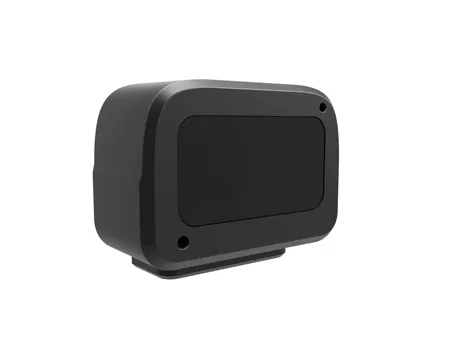
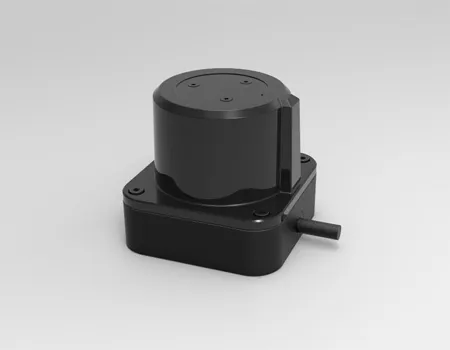
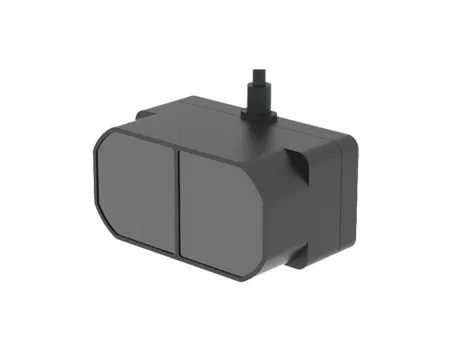
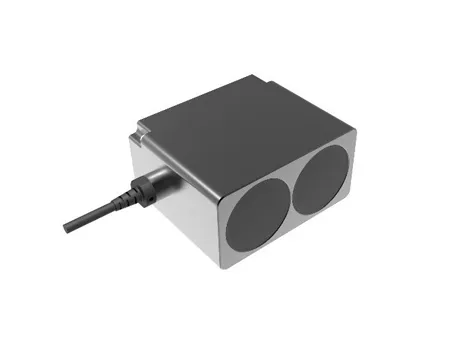
SentiAcu's SPL product family is designed for exactly this application: long-range detection capability, 20m range on low-reflectivity targets, configurable filters for stable operation across different materials, and validated reliability under temperature, dust, and moisture conditions across multiple industrial deployment scenarios.
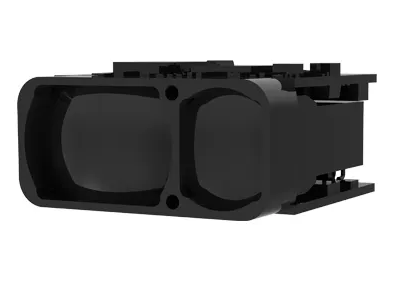
The physics of optical sensing creates a direct relationship between surface reflectivity and signal strength. A white surface with 90% reflectivity returns approximately nine times more light to the sensor receiver than a black surface with 10% reflectivity at the same distance. For intensity-based sensors—standard photoelectric sensors, background suppression sensors, and many vision systems—this difference in return signal directly affects detection reliability. When the return signal from a dark surface falls below the sensor's threshold, the detection fails.
The industrial consequences of this physics constraint:
Black rubber tires and seals are among the most common low-reflectivity targets in automotive and industrial manufacturing. Conveyor-based presence detection, dimensional checking, and positioning systems that work reliably on light-colored components frequently fail on black rubber without sensor reconfiguration.
Carbon fiber and composite panels in aerospace and automotive manufacturing have dark, textured surfaces that absorb infrared light. Positioning, gap checking, and fixture verification systems that rely on optical sensing require careful calibration for carbon fiber targets—and that calibration may not transfer to adjacent components with different surface properties.
Dark packaging and logistics automation presents a continuous challenge in warehouse and fulfillment environments where black cartons, matte labels, dark plastic totes, and mixed-color packaging move through the same conveyor and robot cell systems. A sensor configured for one packaging color may fail on another without manual intervention.
How single point LiDAR changes the equation:
A TOF distance sensor measures distance by timing the return of a laser pulse—not by measuring the intensity of the reflected signal. While signal strength still affects the maximum reliable detection range on low-reflectivity targets, the distance measurement itself is derived from timing rather than intensity. This means that a well-designed single point LiDAR can maintain stable distance output across a much wider range of surface colors and reflectivity levels than intensity-based sensors—reducing the recalibration burden and improving detection consistency on mixed-material production lines.
SentiAcu's SPL catalog covers multiple models from short-range compact sensors to kilometer-class rangefinders, with detection capability reaching 20m on low-reflectivity targets—a performance specification that directly addresses the black surface detection challenge that intensity-based sensors cannot reliably solve.
Understanding the TOF measurement principle helps buyers evaluate why it performs more consistently on low-reflectivity targets than alternative sensing methods—and what design factors determine performance on the most challenging surfaces.
The TOF measurement cycle:
The sensor emits a focused laser pulse toward the target. The pulse travels to the target surface, where a fraction of the light is reflected back toward the sensor. The receiver captures the return pulse, and the processor calculates the distance from the round-trip travel time: distance = (speed of light × time of flight) / 2. The output is a distance value in millimeters or meters, independent of the absolute intensity of the return signal—as long as the return signal is above the minimum detection threshold.
Why this is more stable on dark surfaces than intensity-based sensing:
An intensity-based sensor generates a binary output (detected / not detected) based on whether the return signal exceeds a fixed threshold. When a dark surface reduces the return signal below this threshold, the output switches from "detected" to "not detected"—even if the target is physically present at the correct distance. The sensor cannot distinguish between "target absent" and "target present but low reflectivity."
A TOF sensor generates a distance value rather than a binary output. When a dark surface reduces the return signal, the distance measurement may become noisier or the maximum reliable range may decrease—but within the sensor's validated operating range for the specific target reflectivity, the distance output remains stable and accurate. The sensor can detect the target and report its distance even when the return signal is weak, as long as the signal-to-noise ratio remains above the minimum required for reliable timing measurement.
The role of signal processing and filtering:
SentiAcu's SPL series includes configurable filters that allow buyers to tune the output for specific target materials and operating conditions. Noise filtering reduces the impact of weak or intermittent return signals on the distance output. Threshold configuration allows the system to be optimized for the specific reflectivity range of the production targets. Invalid-signal handling defines the output behavior when the return signal falls below the minimum detection threshold—preventing false distance values from propagating to the control system.
The practical implication for mixed-material production lines:
A single point LiDAR configured and validated for the lowest-reflectivity target in the production mix will maintain stable detection across all higher-reflectivity targets in the same line—without recalibration. This is the core operational advantage over intensity-based sensors that require reconfiguration when product color or material changes.
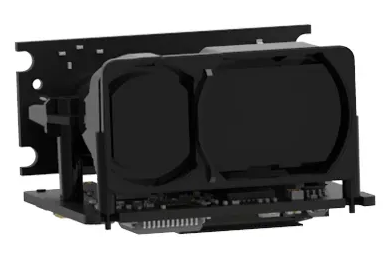
Selecting the right SPL model requires matching the sensor specification to the actual target materials, operating distances, and integration constraints—not only to the maximum range specification on a white target.
The critical specification: range on low-reflectivity targets
The maximum range specification for most sensors is measured on a white (90% reflectivity) target. For dark surfaces (10% reflectivity), the effective range is typically 30–50% of the white-target specification. Buyers should always request the low-reflectivity range specification—not only the maximum range—and validate it against the actual target materials before deployment.
Complete Specification Checklist
| Specification | What to Confirm | Application Relevance |
|---|---|---|
| Range on low-reflectivity target | Detection distance on black rubber, carbon fiber, dark cardboard | Determines real detection margin for dark materials |
| Measurement accuracy | Short-range and long-range accuracy in mm | Supports positioning and quality control applications |
| Repeatability | Standard deviation over repeated readings | Critical for inspection and automation consistency |
| Frame rate | Hz output rate | Affects detection reliability on moving objects |
| Beam angle / FoV | Narrow beam or wider tolerance | Controls target selectivity and adjacent-object interference |
| Interface | UART, CAN, RS485, or custom protocol | Determines integration complexity with PLC or robot controller |
| Environmental rating | Temperature range, IP rating, dust and moisture resistance | Ensures long-term stability in industrial environments |
| Filtering options | Noise filter, threshold configuration, invalid-signal handling | Enables optimization for mixed-reflectivity targets |
| Form factor | Compact module vs. protected housing | Determines fit for robot or machine integration |
SPL Model Reference
For high-frequency industrial applications, the SPL300 series offers up to 10,000 Hz ranging frequency, 0.1–290m range, less than 0.5° field of view, and compact integration dimensions—with an IP67 protective housing option for harsh environments. For long-range applications, the SPL1K2 provides 1,200m range, UART interface, and −40°C to +85°C operating temperature in a compact form factor suitable for vehicle and outdoor integration.
Tire and Rubber Product Measurement Black rubber is one of the most challenging targets for optical sensing—it absorbs infrared light efficiently and returns minimal signal to the receiver. Single point LiDAR with validated low-reflectivity performance can support presence detection, dimensional checking, height measurement, and positioning on tires, belts, seals, and molded rubber components where photoelectric sensors fail or require frequent recalibration. The distance-based measurement principle provides stable output regardless of whether the rubber surface is dry, wet, or contaminated with release agent.
Carbon Fiber and Composite Inspection Carbon fiber surfaces combine low reflectivity with complex texture—the woven fiber pattern creates micro-scale surface variation that scatters reflected light in multiple directions. Single point LiDAR distance sensing supports positioning, gap checking, and fixture verification on carbon fiber components where the distance measurement is more reliable than intensity-based detection. For aerospace and automotive composite manufacturing where dimensional accuracy is critical, the repeatability of the TOF measurement provides the consistency that inspection systems require.
Dark Packaging and Logistics Automation Warehouse and fulfillment environments handle an enormous variety of packaging colors and materials. A single point LiDAR configured for the lowest-reflectivity packaging in the mix—black cartons, matte plastic totes, dark shrink wrap—will detect all higher-reflectivity packaging without reconfiguration. This eliminates the manual sensor adjustment that slows line changeovers and reduces the false reject rate that occurs when sensors are not optimized for the current product mix.
Automated Guided Vehicles and Robots Single-point sensing supports docking, ground clearance monitoring, obstacle confirmation, and short-range positioning on AGVs and collaborative robots where a full 3D scanner is not required. The compact form factor of SPL modules—particularly the SPL300 series—allows integration into tight robot mounting spaces where larger sensors cannot fit. The UART and CAN interfaces support direct connection to robot controllers and embedded computing platforms.
Industrial Level and Displacement Sensing For bins, hoppers, fixtures, moving platforms, and machine components, a single point sensor provides simple real-time distance feedback that supports level monitoring, position verification, and displacement measurement. The high frame rate of the SPL300 series (up to 10,000 Hz) supports fast-moving targets and high-speed process monitoring where lower-frequency sensors miss events.
Outdoor and Harsh-Condition Sensing SentiAcu highlights SPL reliability under temperature variation, dust, and moisture, supported by simplified mechanical design and professional EMC engineering. The SPL1K2's −40°C to +85°C operating temperature range and kilometer-class detection capability support outdoor applications including vehicle detection, perimeter monitoring, and long-range positioning in environments where standard industrial sensors are not rated for operation.
Step 1 — Define the target material and reflectivity range. Identify the lowest-reflectivity target in the production mix—this is the binding constraint for sensor selection. Confirm the material type (black rubber, carbon fiber, dark cardboard, matte plastic, painted metal) and the expected reflectivity range across all products that will pass through the sensing zone.
Step 2 — Confirm the working distance range. Define the minimum distance (closest the target will be to the sensor), the normal working distance, and the maximum detection distance required. Confirm that the selected SPL model's low-reflectivity range specification covers the maximum required detection distance with adequate margin.
Step 3 — Test with real samples. Validate the sensor's performance on actual production targets—not only on standard white and black reference targets. Test white, black, glossy, matte, absorbent, and textured targets under the actual ambient lighting conditions of the installation location. This step is essential for confirming that the sensor's performance on the specific production materials meets the application requirements.
Step 4 — Select the interface. UART for direct connection to embedded computing platforms and robot controllers; CAN for vehicle and machine integration; RS485 for PLC-based industrial automation. Confirm protocol compatibility with the existing control system before ordering.
Step 5 — Configure filters. Tune output smoothing, threshold logic, and invalid-signal handling for the specific target materials and operating conditions. The goal is to maximize detection stability on low-reflectivity targets while minimizing false outputs from ambient light, dust, or adjacent surfaces.
Step 6 — Plan mounting and protection. Control beam alignment angle, vibration isolation, lens cleanliness maintenance schedule, and protection from impact or contamination. For outdoor or dusty environments, confirm that the housing IP rating matches the installation conditions.
Step 7 — Validate long-term stability. Test under dust accumulation, humidity cycling, temperature variation, and target-color switching to confirm that the configured system maintains its performance specification across the full range of operating conditions.
Fewer false rejects from stable detection across color and material changes reduce the scrap and rework cost that accumulates when sensors misidentify dark targets as absent. For high-value components—carbon fiber panels, precision rubber seals—a single prevented false reject can recover significant material cost.
Less manual retuning from a sensor that maintains stable output across the production material mix reduces the labor cost of sensor adjustment and the production downtime associated with line stops for sensor recalibration.
Lower integration cost when only one distance point is needed—single point LiDAR is simpler and less expensive to integrate than full 2D or 3D scanning systems for applications that require only a distance value at a specific location.
Faster line changeover for mixed-material production when the sensor does not require reconfiguration between product colors or materials—reducing changeover time and improving line utilization.
Better measurement consistency for dark or absorbent targets across production shifts, temperature changes, and ambient light variation—reducing the quality variation that occurs when sensor performance drifts with environmental conditions.
Industrial sensing in 2026 cannot assume that every target is white, reflective, and easy to detect. Black rubber, carbon fiber, dark packaging, and matte-coated components are standard production materials that challenge intensity-based sensors and require a different measurement approach. A single point LiDAR using TOF distance sensing provides stable distance output across a wide range of surface colors and reflectivity levels—reducing the recalibration burden, improving detection consistency on mixed-material lines, and enabling reliable automation on targets that conventional sensors cannot handle. SentiAcu's SPL family covers the full range from compact high-frequency modules to kilometer-class rangefinders, with configurable filters, validated low-reflectivity performance, and industrial environmental ratings for demanding production environments.
Visit the SentiAcu Single Point LiDAR product page to request a recommended SPL configuration and quotation.
Please submit the following details for an accurate recommendation:
Work condition: Indoor or outdoor, dust level, moisture, ambient light conditions, vibration, target speed, installation angle
Quantity: Prototype units, pilot line quantity, production rollout quantity, or annual procurement plan
Size/spec: Required detection range on low-reflectivity targets, accuracy, repeatability, frame rate, beam angle, interface (UART/CAN/RS485), housing or IP rating, power supply
Target metrics: Low-reflectivity detection rate, distance stability across material changes, response time, false-detection reduction, line-speed compatibility
Current problems: Black targets not detected, unstable readings on dark materials, sensor retuning required after color change, false rejects on low-reflectivity surfaces, poor repeatability, weak signal on absorbent materials
1. What is single point LiDAR?
A laser distance sensor that measures the distance to one specific target point using Time-of-Flight or phase-shift principles, rather than scanning a full 2D or 3D field. It is used for focused ranging, presence detection, positioning, level sensing, and displacement feedback in industrial automation, robotics, and vehicle applications. SentiAcu's SPL series covers ranges from sub-meter to kilometer-class detection with multiple interface and housing options.
2. Single point LiDAR vs. camera vs. ultrasonic sensor: which is better for low-reflectivity detection?
Single point LiDAR: best for stable distance measurement on dark, matte, and low-reflectivity targets where intensity-based sensors fail—the primary recommendation for black rubber, carbon fiber, and dark packaging detection.
Camera: strong for visual classification and shape recognition, but performance on dark targets depends heavily on lighting design and contrast—requires careful lighting engineering for low-reflectivity surfaces.
Ultrasonic sensor: useful for some distance sensing tasks and is not affected by surface color, but typically provides lower spatial precision, is affected by target geometry and airflow, and has slower response times than LiDAR for high-speed applications.
3. What is the ROI of using single point LiDAR for low-reflectivity object detection?
ROI comes from fewer missed detections on dark targets (reducing scrap and production stops), less manual sensor retuning (reducing labor cost and downtime), faster line changeovers for mixed-material production (improving line utilization), and more stable automation performance across product color and material variation. For production lines with frequent material changes, the elimination of per-changeover sensor recalibration alone can justify the investment within weeks.
4. Does single point LiDAR require machine redesign?
No full redesign is typically required. Most deployments need a mounting bracket, power and data connection, software threshold configuration, and validation using real target materials. The compact form factor of SPL modules—particularly the SPL300 series at sub-100mm dimensions—minimizes the mechanical integration burden for most robot and machine applications.
5. What parameters are needed for correct selection and quotation?
Target material and color (including the lowest-reflectivity material in the production mix), working distance range (minimum, normal, maximum), required accuracy and repeatability, object speed, ambient environment (dust, moisture, temperature, vibration), mounting space and angle, interface requirement (UART/CAN/RS485), housing or IP rating requirement, quantity, and current failure mode such as missed black targets, unstable readings on dark materials, or frequent recalibration requirements.