The manufacturing measurement paradigm is shifting. For decades, measurement meant inspection—a quality gate at the end of a process that confirmed whether a part was acceptable or not. By the time a defect was detected, the tooling had already worn, the fixture had already drifted, and dozens of non-conforming parts had already been produced. The inspection result told you what had happened. It told you nothing about what was about to happen, and it gave you no mechanism to prevent it.
The 2026 manufacturing environment demands something fundamentally different: measurement that feeds forward into the production process, not backward into the quality record. Aerospace, automotive, precision machining, robotics, mold manufacturing, and automated assembly lines now need high-density spatial data that can synchronize digital twin models in real time, train AI prediction algorithms, and trigger automatic parameter corrections before defects occur. Laser scanner measurement is the technology that makes this possible—converting physical geometry into dense 3D point cloud data at the speed and resolution that closed-loop manufacturing optimization requires.
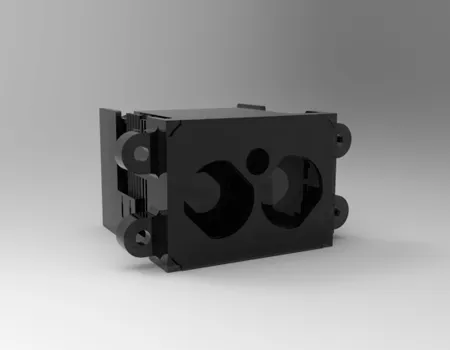
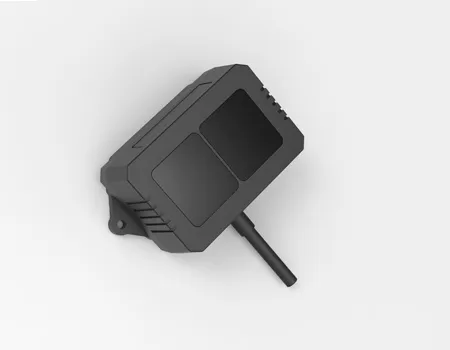
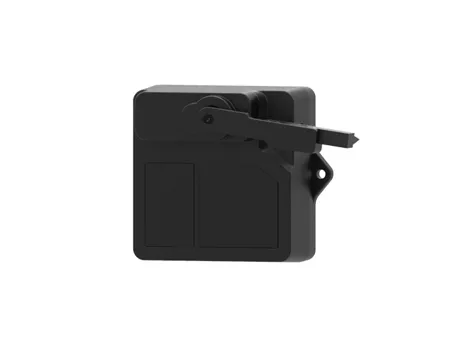
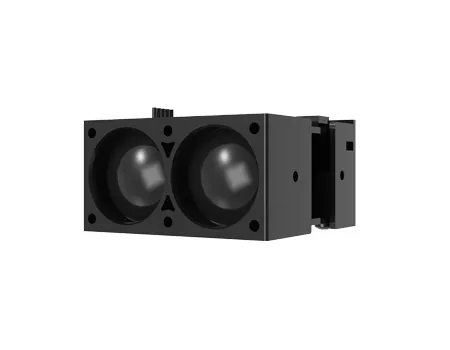
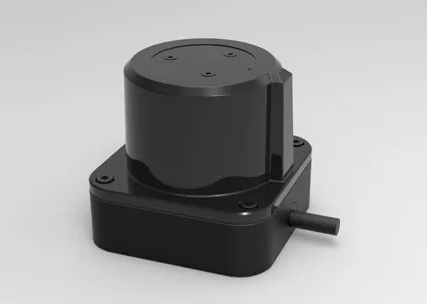
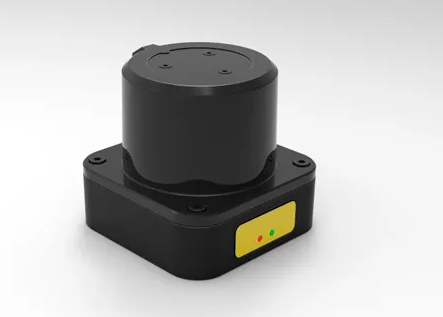
SentiAcu's Laser Scanner Measurement (LSM) series is designed for exactly this application: 40k points/second point cloud output, 20m range on low-reflectivity targets, reliable operation across black floors and glass surfaces, and validated performance across 50 extreme environmental conditions including temperature variation, dust, and moisture.
A digital twin is only as accurate as the real-world data feeding it. A twin built from CAD geometry and design assumptions reflects the intended production process—not the actual one. As tooling wears, fixtures drift, materials vary, and thermal conditions change, the gap between the digital model and physical reality widens. A twin that is not continuously updated with real measurement data becomes a static model that optimizes for conditions that no longer exist.
Laser scanner measurement closes this gap by providing continuous, high-density geometric feedback from the physical production environment. Unlike contact measurement methods that sample a limited number of discrete points, a scanning LiDAR sensor captures the full spatial geometry of a target surface—generating a dense 3D point cloud that represents the actual shape, position, and surface profile of the measured object at a specific moment in time.
What this data enables for digital twin synchronization:
Real-time geometric feedback: the digital twin receives updated geometry data at the scan rate of the sensor, allowing it to reflect current production conditions rather than design assumptions
Surface deviation detection: comparing the point cloud against the CAD model reveals where the physical part or tooling deviates from nominal—identifying wear, deformation, or misalignment before it produces defects
Process drift tracking: sequential point cloud captures over time reveal trends in dimensional drift, tool wear progression, or fixture movement that allow predictive intervention
AI model training: historical point cloud data provides the labeled spatial dataset that machine learning algorithms need to correlate measurement patterns with process outcomes—enabling prediction of tool life, mold deformation, or assembly error probability
SentiAcu's LSM technology outputs dense point clouds at 40k points/second, providing azimuth, distance, and reflectivity data—a data density that supports both real-time digital twin synchronization and the historical dataset accumulation that AI prediction models require.
The operating principle of a laser scanner measurement system involves four sequential stages: data capture, point cloud generation, comparison and analysis, and process feedback.
Stage 1 — Data capture: The LSM sensor emits laser pulses or beams that scan the target area. Reflected signals are captured and converted into distance and angle measurements using time-of-flight or phase-shift principles. The sensor's angular resolution determines the spatial density of the measurement grid—finer angular resolution produces more closely spaced measurement points and higher surface detail capture.
SentiAcu's LSM series achieves exceptional angular resolution with minimal horizontal error, delivering highly accurate scanning across the measurement range. The system performs reliably on challenging surfaces including black floors and glass—materials that cause significant measurement errors in lower-quality scanning systems due to low reflectivity or specular reflection.
Stage 2 — Point cloud generation: The captured distance and angle data is converted into a 3D point cloud—a set of spatial coordinates (X, Y, Z) representing the measured surface. Each point also carries reflectivity data, which provides additional information about surface material and condition. At 40k points/second, the LSM system generates a dense spatial representation of the target that captures fine surface features, edge geometry, and dimensional relationships.
Stage 3 — Comparison and analysis: The point cloud is compared against the reference model—CAD geometry, tolerance boundaries, or historical baseline data. Deviation analysis identifies where the measured geometry differs from nominal, quantifies the magnitude of the deviation, and classifies it by type (dimensional error, surface waviness, positional offset, or progressive drift). AI algorithms can analyze deviation patterns across multiple scans to identify trends that indicate developing problems—tool wear progression, thermal deformation cycles, or fixture fatigue.
Stage 4 — Process feedback: The analysis results are transmitted to the production control system—PLC, MES, robot controller, or digital twin platform. Depending on the deviation type and magnitude, the feedback triggers specific responses: tool offset correction in a CNC machining center, robot path adjustment in an assembly cell, maintenance alert for a worn fixture, or parameter update in the digital twin model. This closes the smart manufacturing feedback loop—converting measurement data into production improvement rather than quality records.
A complete B2B specification for a laser scanner measurement system must address both measurement performance and data integration capability. A scanner that measures accurately but cannot connect to the production control system does not enable closed-loop optimization.
Measurement Performance Specifications
| Specification | What to Confirm | Application Relevance |
|---|---|---|
| Measurement range | Working distance at target reflectivity | Determines installation geometry and standoff distance |
| Point cloud density | Points/second and scan frequency | Affects digital twin update quality and AI training data density |
| Angular resolution | Horizontal and vertical resolution | Controls surface detail capture and edge definition |
| Distance accuracy | Distance error and repeatability | Supports metrology confidence for process control decisions |
| Reflectivity handling | Low-reflectivity, black, glass, shiny surfaces | Critical for industrial environments with mixed surface types |
| Environmental reliability | Temperature range, dust ingress, moisture, vibration | Determines long-term stability in production environments |
SentiAcu's LSM series achieves 20m range on low-reflectivity targets and has been validated across 50 extreme conditions including temperature variation, dust, and moisture—a reliability standard that supports deployment in demanding production environments without performance degradation.
Data Integration Specifications
| Specification | What to Confirm | Application Relevance |
|---|---|---|
| Data output format | Point cloud format, SDK/API availability | Determines compatibility with analysis software |
| Communication interface | Ethernet, serial, CAN, or proprietary | Affects integration with PLC, MES, and digital twin platforms |
| Software compatibility | CAD, MES, robot controller, AI analytics platform | Determines closed-loop capability |
| Scan rate | Scans per second | Affects real-time feedback latency |
| Calibration workflow | Field calibration method, reference targets | Protects long-term measurement accuracy |
Configuration Checklist for B2B Procurement:
Target object: material, surface finish, reflectivity, size, and geometry
Required measurement range and accuracy
Point cloud density requirement for the specific AI or digital twin application
Installation method: fixed station, robot-mounted, conveyor-side, or mobile
Data interface: confirm compatibility with existing PLC, MES, or digital twin platform
Environmental conditions: temperature range, dust level, moisture, vibration from adjacent equipment
Calibration and verification workflow for production deployment
CNC Machining and Tool Wear Prediction Tool wear in CNC machining produces progressive dimensional drift—the machined surface gradually deviates from nominal as the cutting edge degrades. A laser scanner measurement system installed at the machining station captures the surface geometry of each part after machining. AI algorithms correlate the dimensional drift pattern with tool wear progression, predicting the remaining tool life and recommending tool changes before the drift exceeds the tolerance boundary. This converts tool management from a time-based schedule to a condition-based prediction—reducing both premature tool changes and scrap from worn tools.
Mold and Die Deformation Monitoring In stamping, injection molding, die casting, and composite forming, mold deformation under thermal and mechanical cycling causes progressive changes in part geometry. Periodic laser scanning of the mold cavity or formed part geometry detects deformation trends before they produce out-of-tolerance parts. The point cloud data feeds the digital twin of the mold, allowing simulation of future deformation and optimization of process parameters—temperature, pressure, cycle time—to compensate for the measured deformation.
Robotic Assembly and Alignment Verification Robot path planning is based on nominal part positions. In practice, part-to-part variation, fixture wear, and thermal expansion cause actual part positions to deviate from nominal. A laser scanner integrated with the robot controller measures actual part position before each assembly operation and updates the robot path in real time—reducing assembly errors caused by tolerance stack-up and eliminating the manual alignment adjustments that slow production.
Automated Full-Surface Inspection Traditional inspection samples a limited number of critical dimensions. Laser scanner measurement captures the full surface geometry of a part, enabling defect localization across the entire surface rather than only at pre-defined measurement points. This is particularly valuable for complex formed parts, castings, and composite structures where defects can occur anywhere on the surface.
Digital Twin Model Synchronization Real-time or periodic point cloud updates allow the digital twin to reflect actual production conditions—tooling wear state, fixture position, thermal deformation—rather than relying on design assumptions that diverge from reality over time. A synchronized digital twin provides accurate simulation results for process optimization, maintenance planning, and production scheduling.
Harsh-Environment Industrial Monitoring SentiAcu's LSM series has been tested across 50 extreme conditions including temperature variations, dust, and moisture, with simplified mechanical design and professional EMC engineering ensuring long-term operational stability. This reliability profile supports deployment in foundries, stamping plants, chemical processing facilities, and other harsh production environments where less robust sensors fail prematurely.
Step 1 — Define the process problem. Tool wear, mold deformation, part warpage, robot positioning error, surface inspection gap, or digital twin synchronization lag. The specific problem determines the required measurement range, accuracy, scan rate, and data integration architecture.
Step 2 — Characterize the measurement target. Material, surface reflectivity, geometry, size, measurement distance, and required accuracy. Confirm that the scanner's reflectivity handling capability covers the target surface—particularly for black, glass, or highly polished surfaces that challenge lower-quality scanning systems.
Step 3 — Choose the scanner installation geometry. Fixed station for in-process or post-process measurement at a defined location; robot-mounted for flexible measurement across multiple part positions; conveyor-side for inline measurement of moving parts; mobile inspection cell for flexible deployment across multiple stations.
Step 4 — Plan the data integration architecture. Define the data path from scanner output to the analysis system (CAD comparison software, AI analytics platform, digital twin model) and from the analysis system to the production control system (PLC, MES, robot controller). Confirm data format compatibility and communication interface at each integration point before specifying the scanner.
Step 5 — Build the feedback loop logic. Define the specific responses that measurement results trigger: tool offset correction thresholds, maintenance alert criteria, robot path update logic, or digital twin synchronization frequency. The feedback loop logic determines whether the measurement system delivers process optimization or only inspection records.
Step 6 — Validate accuracy and repeatability. Use reference parts, calibration targets, and repeatability tests to confirm that the deployed system meets the required measurement accuracy under production conditions—including vibration, temperature variation, and ambient light levels.
Step 7 — Scale from pilot to production. Start with one critical measurement station, validate the feedback loop performance, and expand to multi-station digital twin monitoring once the integration architecture is proven.
Lower scrap rate from earlier deviation detection—catching tool wear or fixture drift before it produces out-of-tolerance parts—reduces the material and labor cost of scrap and rework. For high-value aerospace or automotive components, a single prevented scrap event can recover the cost of the measurement system.
Reduced manual inspection labor from automated point cloud capture and analysis eliminates the skilled labor cost of manual CMM programming, fixture setup, and measurement execution for routine inspection tasks.
Predictive maintenance from trend analysis of point cloud data reduces unplanned downtime by identifying developing equipment problems—tool wear, bearing degradation, fixture fatigue—before they cause production failures.
Faster root-cause analysis from historical point cloud data provides the spatial evidence needed to diagnose quality problems quickly—reducing the investigation time and production disruption associated with quality escapes.
Higher equipment utilization from condition-based tool and fixture management—replacing components when they are actually worn rather than on a conservative time-based schedule—reduces the cost of premature replacement and the downtime associated with scheduled maintenance stops.
Measurement in 2026 is the data engine for digital twins, AI prediction, and closed-loop manufacturing optimization—not a quality gate at the end of the process. Laser scanner measurement enables factories to capture real-world geometry at 40k points/second, convert it into dense 3D point cloud data, synchronize digital twin models in real time, and feed AI algorithms that predict tool wear, mold deformation, and assembly errors before they produce defects. SentiAcu's LSM series provides the point cloud density, environmental reliability, low-reflectivity performance, and data integration capability that modern industrial measurement and automation projects require.
Visit the SentiAcu Laser Scanner Measurement product page to request a recommended LSM configuration and quotation.
Please submit the following details for an accurate recommendation:
Work condition: Factory environment, target object, surface material and reflectivity, dust or moisture or vibration level, scanning distance, ambient temperature range
Quantity: Pilot system, production-line rollout, multi-station project, or annual procurement plan
Size/spec: Required measurement range, accuracy, point cloud density, scan rate, mounting method, communication interface, software platform
Target metrics: Digital twin update frequency, defect detection threshold, tool-wear prediction accuracy, downtime reduction target, scrap-rate reduction target
Current problems: Manual inspection delay, tool wear uncertainty, mold deformation, robot misalignment, missing point cloud data, poor process feedback loop, digital twin synchronization lag
1. What is laser scanner measurement?
A non-contact measurement method that uses scanning LiDAR technology to emit laser pulses, capture reflected signals, and generate dense 3D point clouds representing the geometry, position, and surface profile of a target object. In manufacturing applications, it provides the spatial data foundation for digital twin synchronization, AI-based process prediction, and closed-loop parameter correction.
2. Laser scanner measurement vs. CMM vs. camera vision: which is better?
Laser scanner measurement: best for fast, non-contact 3D surface and spatial data capture across large areas—ideal for digital twin synchronization, tool wear monitoring, and full-surface inspection.
CMM: excellent for high-accuracy contact measurement of discrete features, but slower and less suited to continuous production feedback or full-surface capture.
Camera vision: strong for 2D inspection, presence/absence checks, and visual surface defects, but requires additional depth sensing for full 3D metrology and is less effective for geometric deviation analysis.
For closed-loop manufacturing optimization and digital twin applications, laser scanner measurement provides the combination of speed, coverage, and 3D data density that neither CMM nor camera vision can match.
3. What is the ROI of laser scanning for digital twin projects?
ROI comes from lower scrap rates (earlier deviation detection), reduced manual inspection labor (automated point cloud capture and analysis), earlier tool-wear detection (preventing scrap from worn tooling), reduced unplanned downtime (predictive maintenance from trend analysis), faster root-cause analysis (historical spatial data), and automated parameter correction (closed-loop feedback to PLC or MES). For high-value production environments, the ROI is typically measured in months rather than years.
4. Does laser scanner measurement require production line modification?
Some integration work is typically required: scanner mounting and positioning, calibration target installation, data communication wiring, software setup for point cloud analysis and CAD comparison, and PLC or MES integration for closed-loop feedback. The scope depends on whether the scanner is used offline (periodic inspection), inline (continuous monitoring), or in a closed-loop control system (real-time parameter correction). SentiAcu's engineering support assists with integration planning to minimize deployment complexity.
5. What parameters are needed for correct selection and quotation?
Target object size and geometry, surface material and reflectivity, required measurement range and accuracy, point cloud density requirement, scan rate, installation method (fixed/robot-mounted/mobile), data interface and communication protocol, software platform (CAD comparison, MES, digital twin, AI analytics), environmental conditions (temperature, dust, moisture, vibration), and the specific process problem being addressed (tool wear, mold deformation, robot positioning, digital twin synchronization, or surface inspection).